
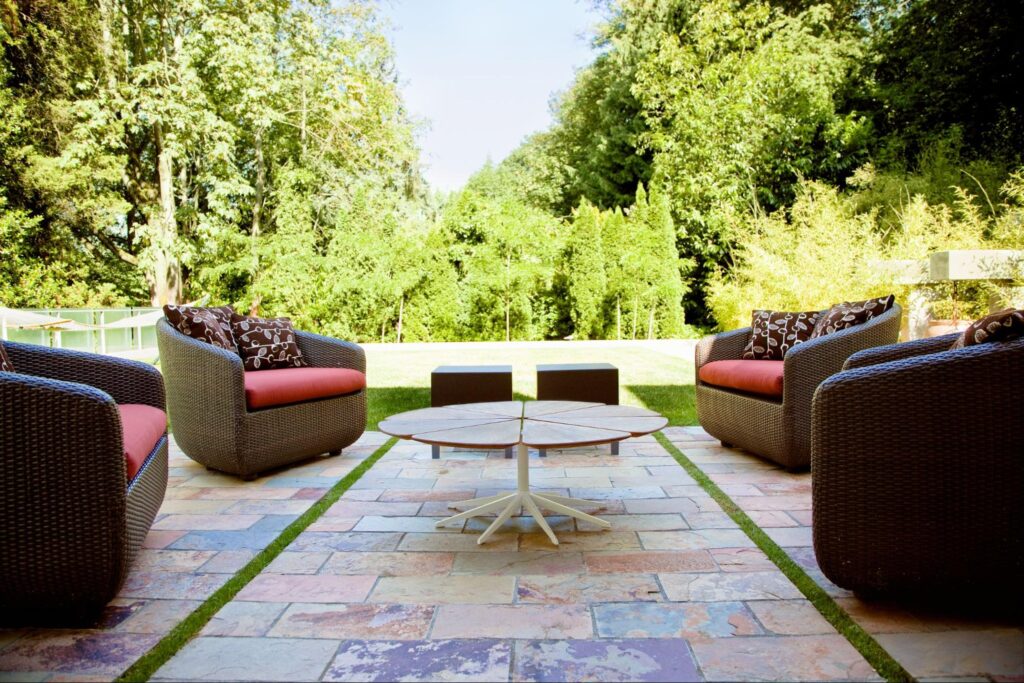
Modern patio design ideas blend comfort and clean aesthetics to shape an outdoor area that feels relaxing and stylish. A smart layout invites people to unwind, entertain, or enjoy fresh air without losing visual appeal. Materials, furniture, and layout choices shape a functional space. Mixing contemporary elements and natural touches builds a grounded and welcoming setting. Every design choice, including lighting and seating, influences how the patio becomes part of everyday living.
Best Patio Design Ideas for Maximizing Space and Flow
Designing a patio that feels open and easy to navigate starts with a plan that focuses on balance. Each element must contribute to how people move, sit, and relax without overcrowding the space. A streamlined layout with a combination of practical choices can create a seamless outdoor experience. The patio becomes more inviting and usable day or night by focusing on how each area functions. Patio design ideas effective for maximizing space and flow are:
Using Open Layouts With Clear Pathways
Keep furniture low and away from traffic zones to avoid blocking walking space. Open layouts create breathing room and make the space feel larger than it is. Pathways between zones should be wide enough for people to move without squeezing. This setup encourages natural flow and avoids visual clutter.
Dividing the Patio Into Functional Zones
Separate areas for lounging, dining, and garden features prevent crowding. Zones can be marked using rugs, planters, or changes in flooring texture. Defining each section gives the patio purpose while keeping it organized. It also helps guests know where to go during gatherings.
Choosing Lightweight and Moveable Furniture
Opt for pieces that are easy to rearrange depending on the need. Stackable chairs or foldable tables adapt the space for parties or quiet afternoons. Lighter furniture avoids bulk and keeps the design flexible. This approach ensures the patio stays dynamic without constant effort.
Aligning Furniture With the Perimeter
Positioning seating and tables along the edges opens up the central area. This layout keeps sightlines clear and reduces visual barriers. It also helps create a natural sense of direction in how people walk or interact. Perimeter arrangements work well for both small and large patios.
Installing Built-In Features That Save Space
Benches, fire pits, and planters built into the structure reduce clutter. These fixtures maximize square footage without crowding the area with separate pieces. Built-ins also create a more unified look that ties the design together. Each feature serves a purpose while freeing up floor space.
Patio Design Ideas Utilizing Comfort-First Furniture
Comfort-first furniture helps transform any patio into a restful outdoor extension of daily life. Every piece should invite relaxation without adding bulk or disrupting the overall design. Clean silhouettes, smart materials, and functional layouts create a cozy setting without sacrificing space. When chosen carefully, furniture becomes more than just a place to sit. Here are the simple steps for choosing furniture:
1. Pick Seating With Low Profiles and Deep Cushions
Low-profile designs keep the view open while offering support. Deep cushions encourage longer lounging without feeling stiff or formal. Look for weather-resistant fabrics that don’t fade or trap heat. The goal is to maintain comfort while keeping the design clean.
2. Choose Modular Furniture for Flexible Layouts
Modular sets allow for different arrangements based on the occasion. Rearranging sections creates new seating setups without buying extra pieces. This flexibility is helpful for entertaining or creating quiet corners. It supports both small gatherings and solo relaxation.
3. Use Ottomans and Daybeds for Added Comfort
Ottomans provide extra seating or a place to rest tired legs, and daybeds create a luxurious spot for afternoon naps or reading. These additions make the patio feel more like a living space than an outdoor one. Comfort-focused features like these make long stays outside more enjoyable.
4. Stick to Neutral Fabrics and Streamlined Frames
Neutral colors keep the visual tone soft and modern. Streamlined frames prevent the space from feeling crowded or heavy. Materials like powder-coated steel or treated wood support clean lines without looking too industrial. These details contribute to an atmosphere that feels relaxed and inviting.
5. Add Side Tables for Practical Comfort
Side tables make it easy to keep drinks, books, or phones within reach. Small and sturdy options fit into corners without wasting space. Tables placed near seating help reduce the need for large centerpieces. This setup keeps the layout functional without overcrowding the area.

Patio Design Ideas That Feature Modern Material Choices
Material choices shape a patio’s look and feel and ensure its durability. Clean finishes, simple textures, and sturdy construction help create a patio that feels balanced and easy to use. Each surface should support the layout without drawing unnecessary attention. Consistency across flooring, seating, and décor keeps the entire space grounded and visually aligned.
Incorporate Concrete for Structure and Style
Concrete works well for flooring, benches, and countertops. It provides a smooth, neutral base that pairs easily with wood or metal. Finishes can be brushed, polished, or stamped without losing the minimalist appeal. This material adds a solid foundation without overwhelming the design.
Use Powder-Coated Metal for Sleek Accents
Powder-coated aluminum or steel provides clean lines and long-term durability. These metals resist rust, peeling, and fading under outdoor exposure. When built, metal frames for tables, chairs, and lighting often look sharper. Their strength allows thinner profiles that help keep the layout airy.
Include Hardwood Elements for Warmth
Hardwood softens modern designs by adding organic texture. Teak, ipe, or acacia withstand outdoor use while maintaining their appearance. These woods work for decking, privacy screens, or seating frames. They balance out colder surfaces like concrete and steel.
Use Stone or Pavers With Natural Tones
Natural stone adds texture variation without drawing too much attention. Pavers in muted shades help define zones and guide foot traffic. These surfaces stay cooler underfoot and reduce glare during sunny hours. Their subtle variation supports a natural, lived-in look.
Choose Outdoor Fabrics That Resist Wear
Fabrics for cushions and covers should hold up against the sun, moisture, and mildew. Canvas and performance fabrics stay firm without fading or sagging. These materials are easy to clean and dry quickly after rain. Comfort stays intact even as the weather changes.
Patio Design Ideas That Bring In Natural Elements
Bringing natural elements into a patio design helps soften rigid lines and creates a space that feels more connected to the surroundings. Greenery, wood textures, and organic shapes create a relaxing atmosphere without disrupting the modern look. Nature adds contrast, movement, and calm to structured layouts. These additions also reduce the need for heavy décor or artificial styling.
Build Around Existing Trees or Plants
Instead of clearing the area, shape the layout to include what’s already growing. Trees can provide shade while adding visual height and softness. Surrounding greenery helps block harsh sunlight and adds privacy. Working with nature creates a smoother transition between built elements and the environment.
Add Vertical Gardens to Save Floor Space
Vertical gardens make use of walls or fencing to introduce greenery. They work well in compact patios that lack room for large pots or planters. These setups also act as living dividers between zones. Using climbing plants or stacked planters keeps the footprint small but effective.
Use Native Plants That Thrive in Local Conditions
Selecting plants suited for the local climate reduces upkeep. Native choices grow stronger and resist pests without much care. They also help maintain a consistent look year-round. These plants naturally blend into the landscape, avoiding the need for artificial fillers.
Introduce Water Features With Subtle Movement
A small fountain or pond brings sound and movement into the space. Flowing water creates a calming effect and helps mask surrounding noise. These features can be built into corners or tucked between plants. Keep the design minimal so it fits into the modern theme.
Mix Stone, Gravel, and Wood for Texture
Natural ground materials add texture without overcomplicating the space. Gravel paths, wood decking, and stone borders break up flat surfaces. These materials guide foot traffic while blending into the outdoor setting. Their raw finish adds character without clashing with furniture.
Patio Design Ideas That Use Lighting to Set the Mood
Lighting can shape the atmosphere of a patio more than any other detail. The correct setup creates warmth, improves visibility, and makes the space feel more inviting after dark. Soft, layered light adds comfort without overpowering the overall design. By placing fixtures carefully, the patio can shift from functional during the day to calm and relaxing at night. These simple approaches or ideas can make significant changes.
String Lights for a Warm, Even Glow
String lights spread light evenly without harsh spots. Hanging them across beams or between walls builds a cozy ambiance. Their soft glow makes the space feel intimate without relying on strong overhead fixtures. Choose warm tones to avoid cold or sterile lighting.
Stake Lights Along Pathways
Stake lights guide foot traffic and improve safety after sundown. They work best along borders, walkways, or low garden edges. These lights stay subtle during the day but provide enough visibility at night. Spacing them evenly keeps the design looking tidy.
Lanterns for Flexible Accent Lighting
Lanterns can be moved around as needed and placed on tables or steps. Battery-operated or solar versions reduce the need for wires. Their glow adds to the atmosphere without becoming a distraction. Lanterns also double as décor during the day.
Wall Lights for Focused Coverage
Wall-mounted fixtures provide targeted lighting near entrances or seating. Choose clean, modern designs that match the rest of the patio materials. These lights can frame doors or highlight textured walls. Their placement should support nighttime use without flooding the area with brightness.
Fire Features for Natural Warmth
Fire pits or modern fireplaces offer both light and heat. Their flicker draws attention and makes the space feel more dynamic. These features work as centerpieces for social areas or corners for quiet relaxation. Keep their design simple to match the modern style.

Patio Design Ideas That Support Modern Convenience
Through thoughtful upgrades, a patio should look appealing and support daily activities. Built-in features and tech enhancements make the space easier to use without cluttering the layout. These additions help turn the patio into a flexible zone for work and rest. When integrated cleanly, convenience blends into the design without calling attention to itself.
Charging Ports Near Seating Areas
Outdoor charging ports let you stay connected without stepping inside. Place them near lounge chairs, tables, or built-in benches for easy access. Covered outlets protect against rain and dirt while keeping devices powered. This setup makes the space more usable for work or leisure.
Smart Lighting With Remote Control
Smart lighting allows control through phone apps or voice assistants. Dimming, scheduling, or color-changing options adjust the mood instantly. Fixtures can be hidden in walls or furniture to maintain a clean look. These systems reduce hassle and help extend patio use into the evening.
Outdoor Speakers That Blend Into the Design
Weatherproof speakers can be hidden inside planters, walls, or under seats. Sound reaches the whole area without visible tech clutter. Built-in systems can connect to home networks for smoother playback. Music adds to relaxation without dominating the space.
Storage Spaces for Daily Use Items
Benches with hidden compartments or side tables with drawers help keep the patio tidy. These spots hold pillows, tools, or covers without breaking the layout. Closed storage avoids the need for bulky sheds or bins. A clutter-free space stays visually calm and more comfortable.
Fixtures That Handle Changing Weather
Convenient designs must also survive rain, sun, and dirt. Use hardware and finishes that resist rust or fading. Waterproof tech and sealed installations prevent damage and reduce maintenance. These choices help the patio stay functional across seasons.
Create Better Outdoor Living Through Smart Patio Designs
Patio designs that focus on comfort, function, and clean aesthetics can completely change how an outdoor space is used. Every detail, from layout to lighting, helps shape an area supporting quiet moments and lively gatherings. Thoughtful material choices and purposeful furniture arrangements keep the space inviting without looking crowded. Each feature serves form and function, making the patio more than just an outdoor corner. It turns into a space that naturally fits into daily life.
Upgrade your space using patio designs found in the Summit Home Improvements blog.